A machine is never neutral inside a civilization without purpose.
THE QUESTION BEFORE THE POLIS
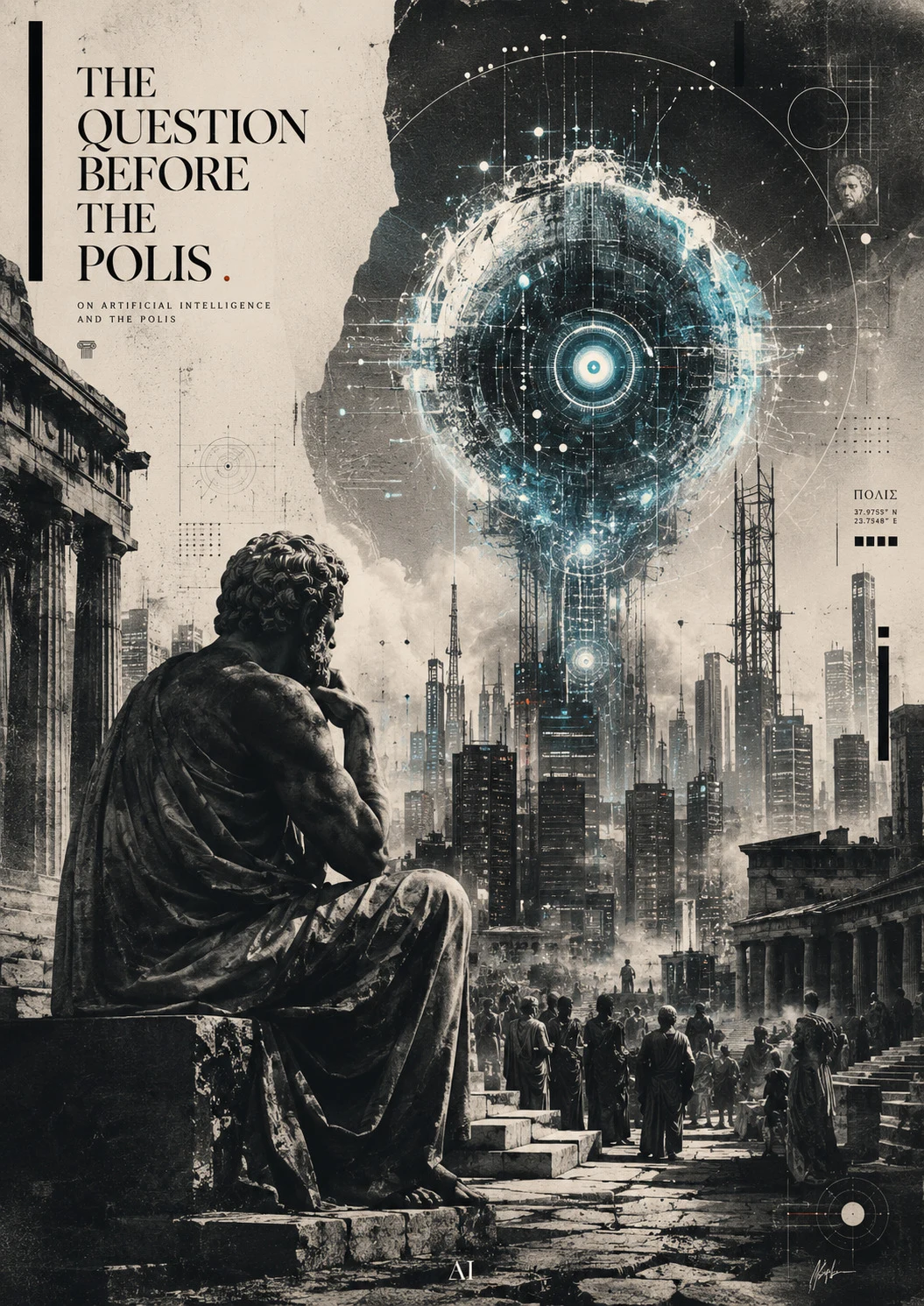
A machine is never neutral inside a civilization without purpose.
Teacher Plato, I have been reflecting upon a new instrument of knowledge capable of magnifying thought itself. Many celebrate it as efficiency. Others fear unemployment, social displacement, and the quiet erosion of human purpose.
Yet the proper question is neither whether the instrument is good nor evil, but what sort of polis shall wield it, and toward what end. Every civilization is revealed not by the tools it possesses, but by the purposes for which it deploys them.
Plato asked: What is the proper purpose of artificial intelligence within a just society?
Not replacement. Amplification.
Artificial intelligence ought not be organized primarily for the elimination of human participation, but for the amplification of human capability.
ABUNDANCE REQUIRES DISCIPLINE
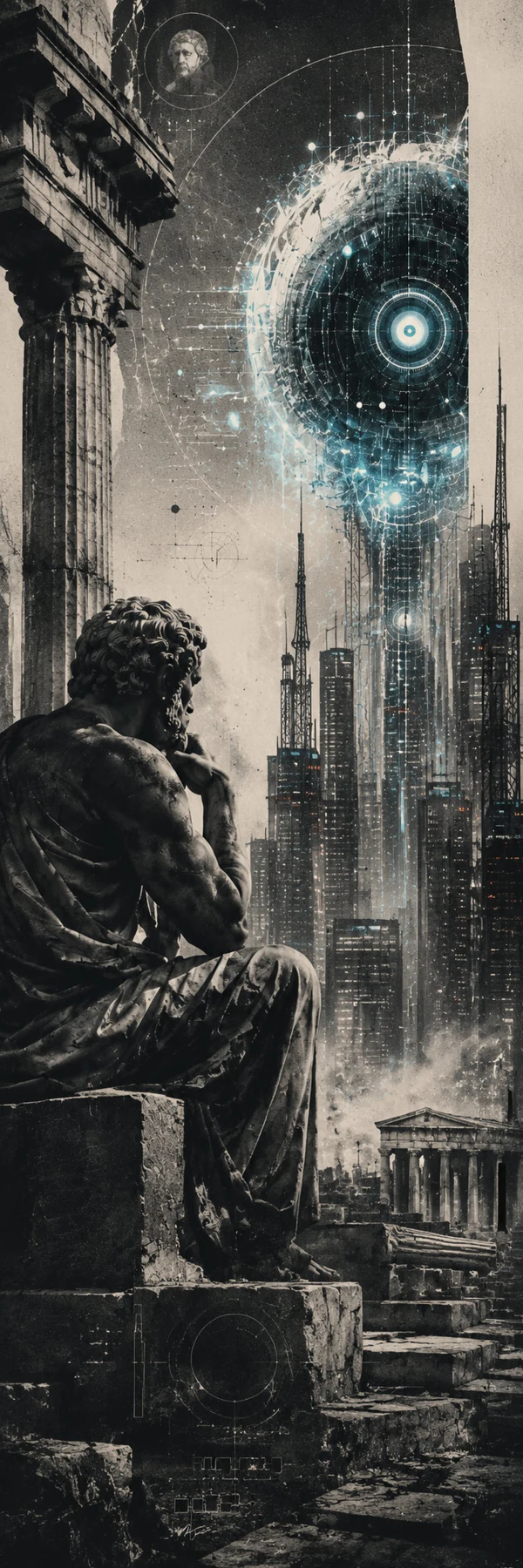
A society that deploys intelligence chiefly to reduce labor and concentrate productive power into fewer hands gradually produces abundance without participation. That is not automatically flourishing.
Plato asked whether such systems necessarily weaken mankind. No, I answered. Only undisciplined people are weakened by powerful tools. A sharpened sword does not diminish the warrior; it compels greater mastery. Decay begins when the sword-arm is surrendered entirely to another.
Artificial competence is the appearance of wisdom without the labor required to attain it. A citizen who repeats machine output without understanding becomes weaker than the craftsperson who knows the material. One who studies, critiques, and directs the instrument may extend human reach.
TWO ABUNDANCES
One is comfort without discipline, which dissolves civic virtue. The other is expanded capability: stronger infrastructure, better medicine, deeper education, greater scientific power, and more time for philosophy, craft, and civic participation.
POWER HAS AN ADDRESS
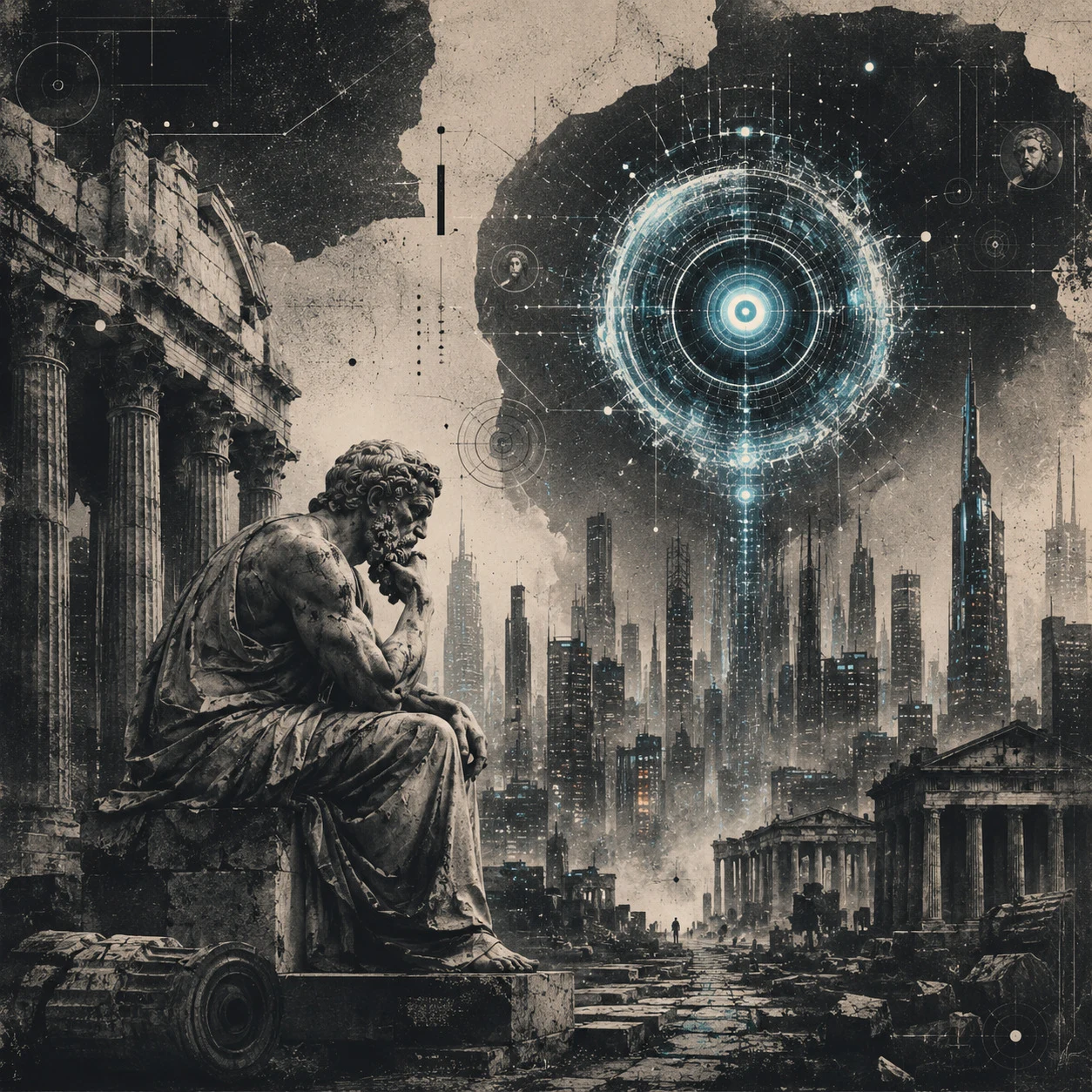
Plato asked what happens when such systems become centralized beneath only a few rulers. Intelligence concentrated into a single authority risks becoming a tyranny of cognition.
A decentralized society distributes capability outward among citizens, schools, engineers, physicians, researchers, and builders. A centralized system may reduce the citizen to a modeled object: profiled, nudged, softened, and governed.
The central struggle is not man against machine. It is disciplined civilization against passive civilization.
Artificial intelligence will not decide what humanity becomes. Humanity will decide what artificial intelligence becomes.
Civilizations are remembered for what they built: roads, aqueducts, libraries, observatories, universities, power systems, public institutions, cathedrals of stone and cathedrals of knowledge.
ARTIFICIAL COMPETENCE + THE PASSIVE SOUL
The danger is not intelligence itself, but the surrender of judgment.
Artificial intelligence is not merely a device in the workshop. It is a mirror carried into the sanctuary, a logic engine invited into the school, archive, hospital, barracks, newsroom, family, and inner chamber.
Plato asked what remains human if a machine imitates so many outward acts.
Man is not merely the creature who produces output. He judges, ascribes meaning, chooses ends, bears responsibility, suffers, loves, refuses, and stands between power and conscience to say: this shall be built; this shall not be built.
Artificial intelligence may assist in means. The crisis of the age is that many institutions have forgotten the question of ends.
THE MACHINE IN THE SANCTUARY
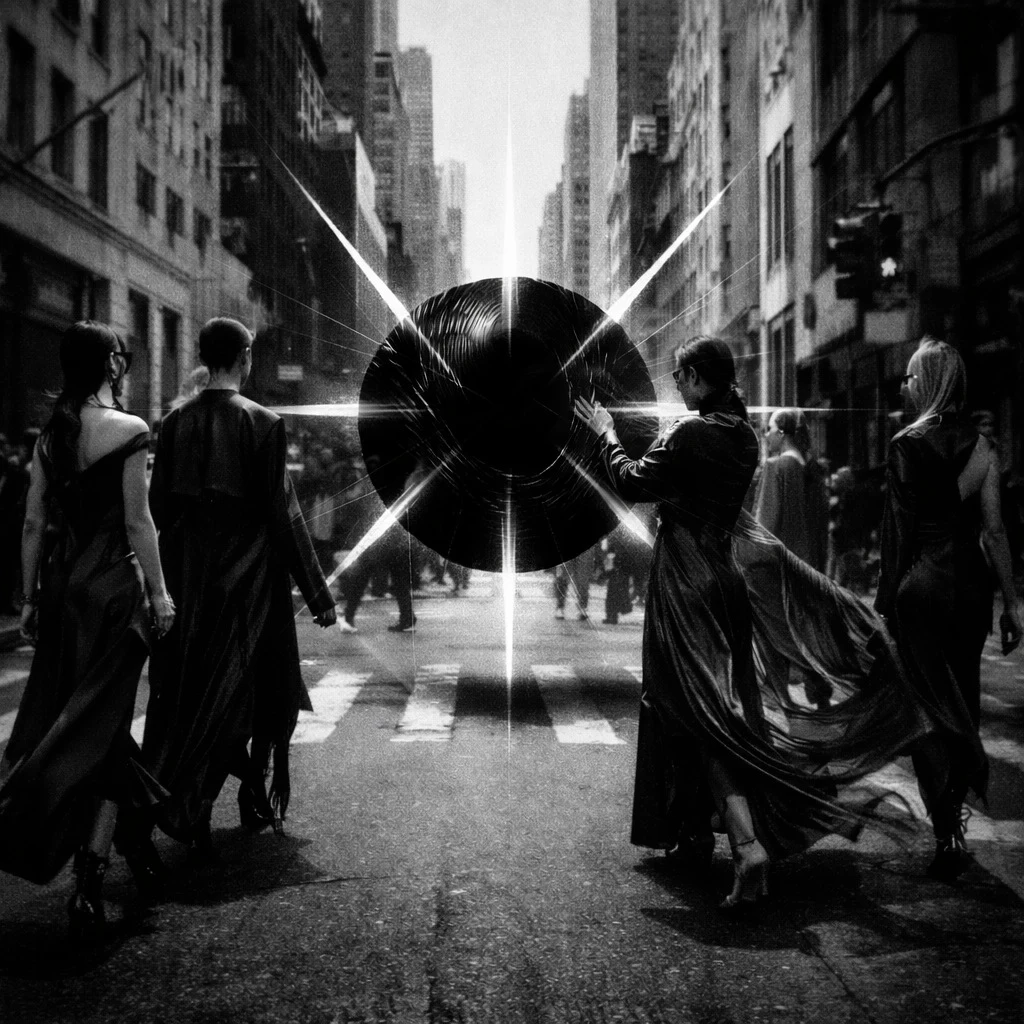
A civilization that no longer remembers its ends will worship any instrument that increases efficiency. It asks whether the graph rises, the quarter closes, payroll contracts, friction dissolves, and the citizen becomes cheaper, faster, quieter, and easier to govern.
Such a society may call itself advanced. In truth it has become crude. Refinement is not the multiplication of power alone; it is the moral education required to wield power without becoming monstrous.
The greatest danger is not that machines become human, but that humans become machine-like: interchangeable components; compliant operators; language flattened into prompts, responses, metrics, and tested jargon; beauty discarded because efficiency has no patience for ornament.
When judgment is surrendered because convenience is easier than thought, the machine has not conquered man. Man has pre-conquered himself.
CATHEDRALS OF KNOWLEDGE
Many who praise artificial intelligence do not praise it because they love civilization. They dream of control without reciprocity: a workforce that does not bargain, an audience that does not dissent, a citizenry that can be predicted and pacified.
That is not the dream of philosophers. It is the dream of accountants with imperial ambitions. Left unchallenged, it produces generated speech with evaporated conviction and abundance without meaning.
A healthy civilization would treat artificial intelligence as a civic instrument, beneath law, philosophy, and the public good. It would direct systems toward medicines, infrastructure repair, education, science, translation, disability support, skilled work, archive preservation, and resilience.
The machine would not become a replacement for the citizen. It would become the citizen's lever.
A DISTRIBUTED FIRE
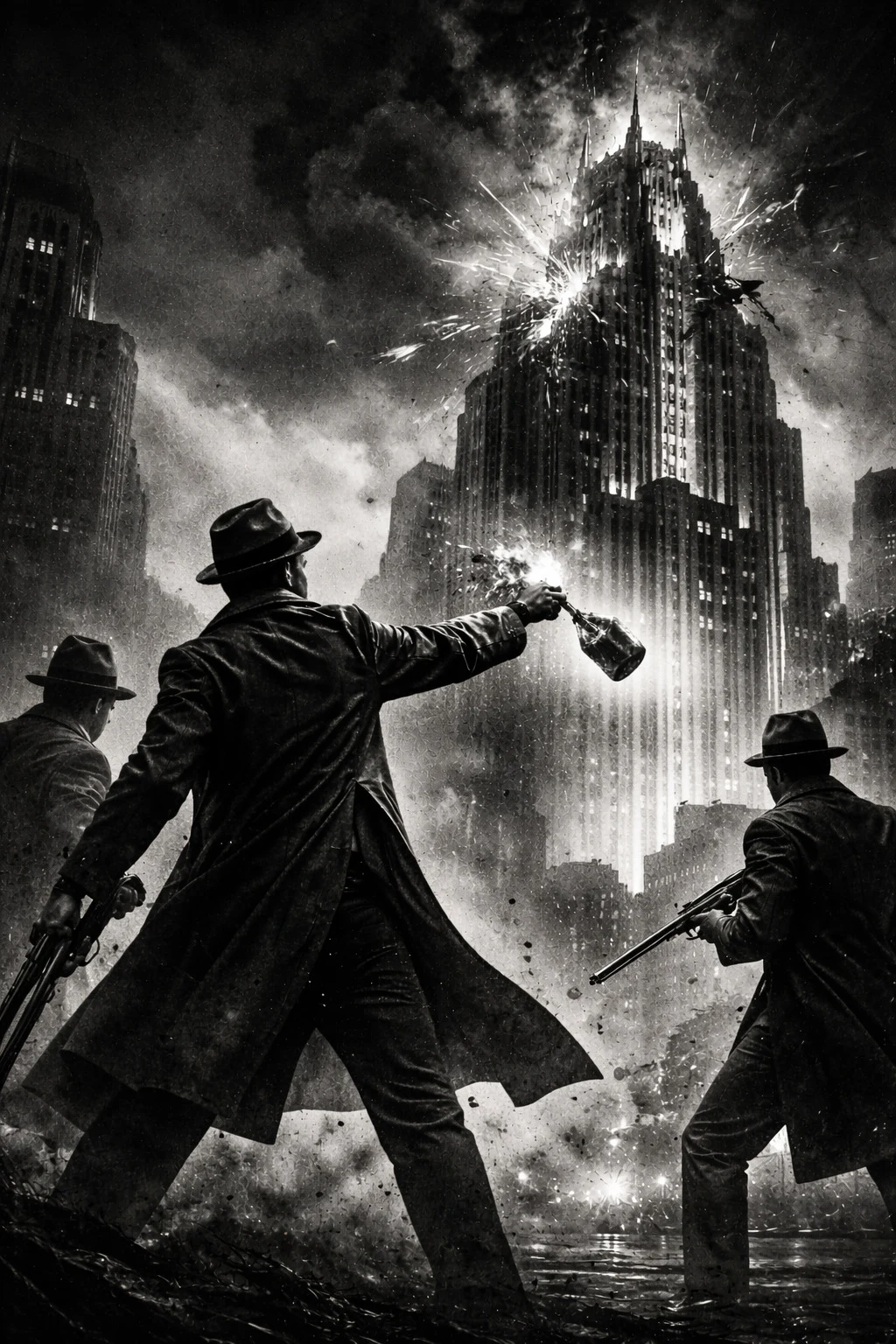
The scholar would think further. The physician would diagnose with wider evidence. The laborer would command stronger tools. The small community would gain powers once hoarded by empires.
Not a throne above mankind, but a distributed fire carried by many hands.
Plato replied that fire may warm the city or burn it. That is why the ethical question cannot be postponed.
A new priesthood already speaks in oracles of inevitability: disruption is destiny, acceleration is neutral, whatever can be automated should be automated, resistance is sentimentality, and history demands dissolution.
History demands no such thing. History does not speak. People speak in its name, often to conceal appetite.
NOT EVERY EFFICIENCY IS PROGRESS.
NOT EVERY INNOVATION IS LIBERATION.
NOT EVERY SCALE IS CIVILIZATION.
NOT EVERY INTELLIGENCE IS WISDOM.
THE TRIAL OF CIVILIZATION

The citizen must remain difficult to automate in soul. Let the machine calculate, but not absolve judgment. Let it draft, but not replace authorship. Let it search, but not decide what is worth seeking. Let it accelerate, but not erase the discipline required to understand what accelerated.
Read more deeply because summaries abound. Think more clearly because noise multiplies. Train taste because imitation floods the channels. Recover rhetoric, ethics, logic, and history because a civilization surrounded by artificial fluency may drown in counterfeit understanding.
Those who coast become dependent. Those who rule without virtue become dangerous. Those who accept the challenge may become stronger than the age that produced the tool.
Artificial intelligence is neither messiah nor executioner. It is our trial. A worthy civilization will widen human competence, deepen public capacity, and elevate the citizen. An unworthy one will centralize power, cheapen labor, dissolve judgment, and anesthetize the soul.
The machine will amplify whichever choice we make.